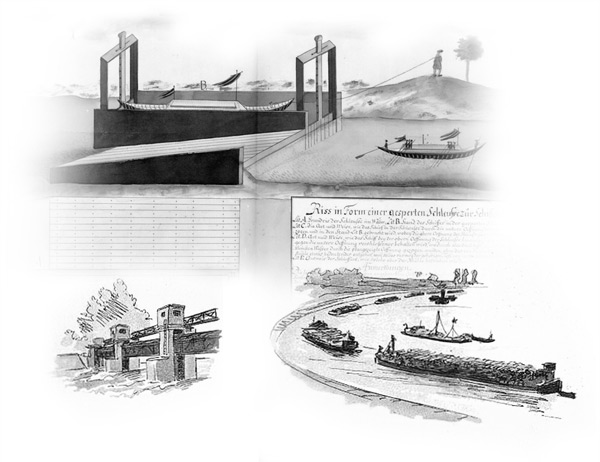
 First technical drawings
The first lock on the Morava river in Rohatec
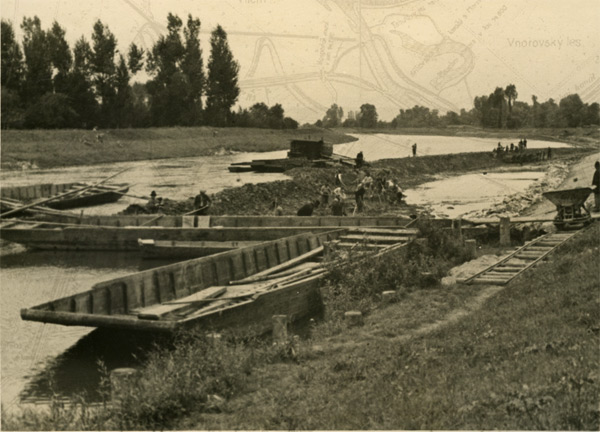
On 28–30 July 2017, revision research into the Morava riverbed was conducted; the reason for this was an information by Eng. Neset, CSc., who has been dealing with historical waterways on a long-term basis, about possible existence of a waterwork (lock) in the unregulated section of the river. The research was to verify the situation, and to detect and document archaeological aspects in the river.
The found remnants of a waterwork could be most probably considered to be a lock from the year 1722, which originally consisted of a lock with chamber and a weir. Taking into account the character of the research, which was conducted at no cost, the dating could not be confirmed by dendrochronological method due to the lack of funds.
Written reports indicate that a monoxylon is supposed to have been found in the hinterland of the village of Rohatec. This monoxylon is said to have been pulled out from the river in the first half of the 20th century.
The lock from the year 1722 is known from written sources not only as part of the existing watermill but also as part of the planned waterway Danube – Oder – Elbe. The lock in Rohatec, built by Oberstwachmeister Herbert von Linck from the stronghold in Uherské Hradiště, became the oldest waterwork of this type in the Czech Republic. From that time, the Morava and the Odra rivers were navigable for small vessels with tonnage of 10 tons.